Before the rice turns into a warm, velvety desserts, it begins here, in its simplest form.
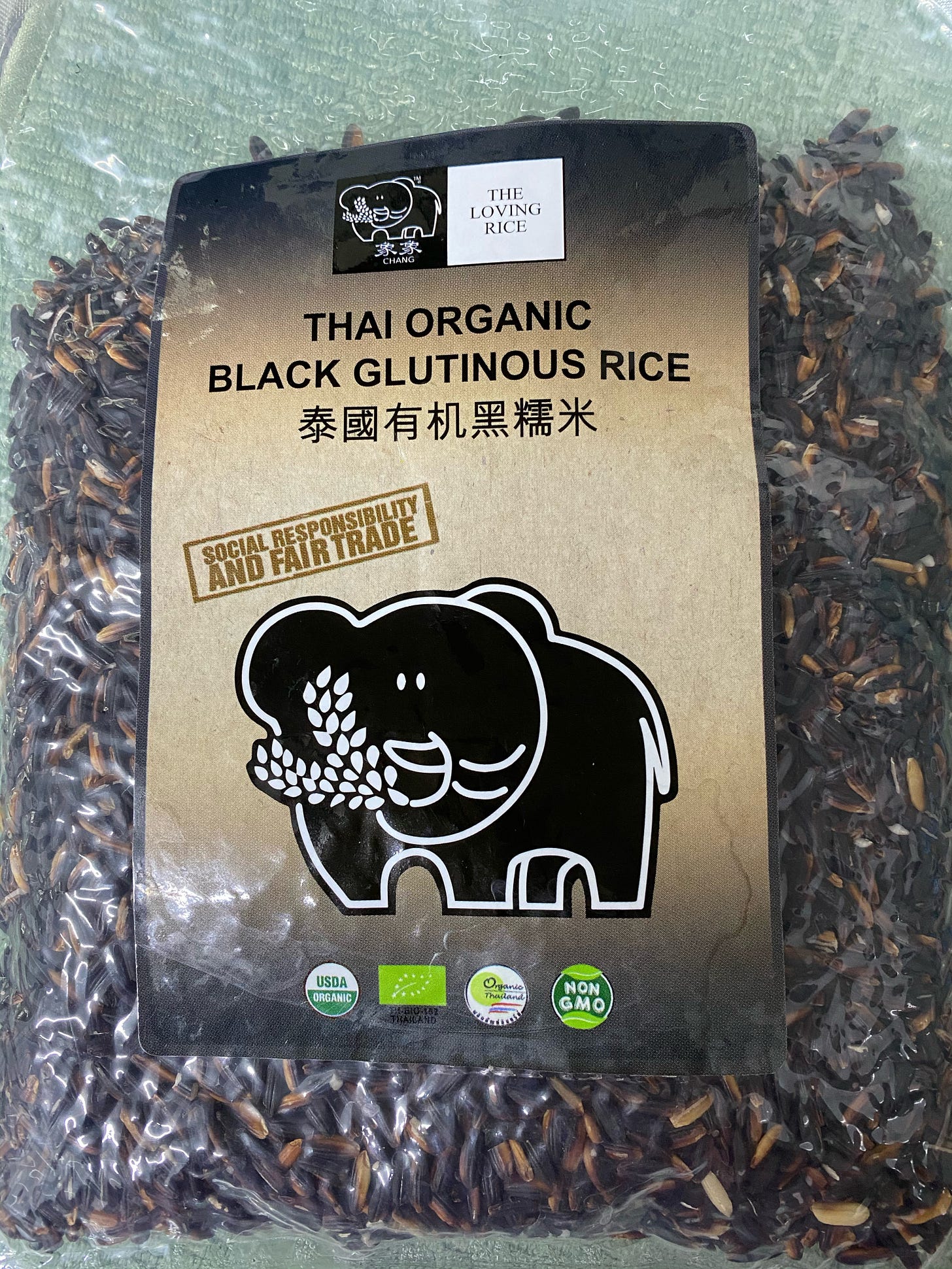 |
| Black Glutinous Rice (photo by JenniferW) |
This is organic black glutinous rice, or pulut hitam, tiny grains with deep purple-black hues and soft, nutty aroma when soaked. There is something calming about watching it rest in water, slow plumping as it prepares to become something nourishing and comforting.
In the olden days, this rice would be stirred gently over a charcoal fire, sweetened with palm sugar and finished with a swirl of coconut milk. Today, I still prepare it with the same care, just with quieter tools and shorter wait times.
A Closer Look at Glutinous Rice
Despite the name, glutinous rice (also called sticky rice or pulut in Malay) contains no gluten at all. The word “glutinous” simply describes its sticky texture when cooked. This special rice is rich in starch and becomes soft, chewy, and naturally sweet, perfect for desserts and festive dishes across Asia.
For the pulut hitam recipe, I’m using black glutinous rice, which has a beautiful deep purple hue and a slightly nutty flavour. It’s a staple in many Southeast Asian kitchens, especially in Malaysia, Singapore, Thailand, and Indonesia. You will often find it used in traditional sweet soups, puddings, and even wrapped in banana leaves for snacks.
Before cooking, the rice is typically soaked for a few hours to help soften the grains and reduce the cooking time. Once cooked, it thickens into a creamy, porridge-like consistency that feels not only comforting and nourishing, but also filling.
There is something special about glutinous rice, humble yet hearty, and a reminder of home for many of us.
💌 Enjoyed this recipe?
You can find more comforting recipes and reflections on Kitchen Gallery for A Journey with Joy at Substack. Subscribing is free, and you are always welcome.
Comments
Post a Comment